
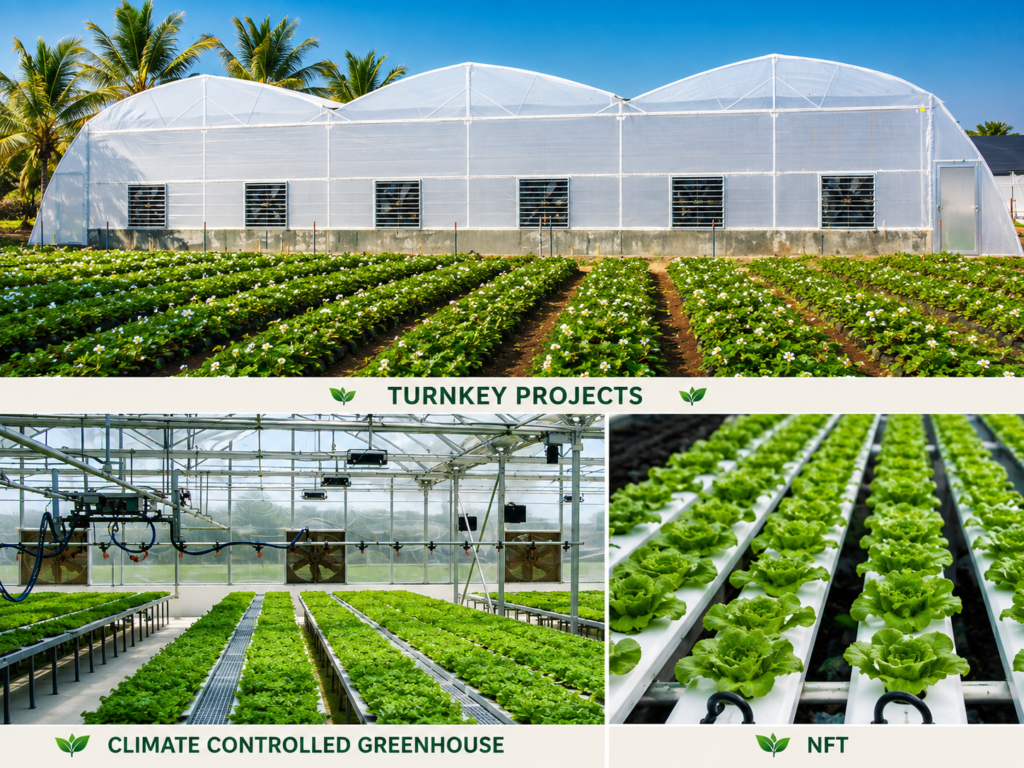
Protected cultivation is a transformative approach to agriculture that allows growers to create an ideal environment for plant growth, regardless of external weather conditions. By manipulating factors like light, temperature, humidity, and CO2 levels, we can achieve higher yields, better quality produce, and year-round harvesting.
What is Protected Cultivation?
At its core, protected cultivation involves growing crops under a partially or fully controlled environment. This technology serves as a shield against unpredictable weather, pests, and diseases, enabling precision farming that maximizes resource efficiency.
Key Technologies and Structures
Different crops require different levels of control. Depending on your goals and budget, you can choose from various structures:
Structure Type | Level of Control | Primary Benefit |
Net Houses | Low | Protection from insects and intense heat. |
Polyhouses | Medium | Climate modulation; extends growing seasons. |
Glasshouses | High | Maximum control; ideal for high-value research/crops. |
Hydroponic Systems | Very High | Soil-less cultivation; extreme water efficiency. |
Core Advantages
Transitioning to protected cultivation offers significant benefits for both commercial farmers and niche growers:
Year-Round Production: Remove the limitations of traditional planting calendars.
Enhanced Yield and Quality: Controlled environments result in uniform, high-quality produce that fetches premium market prices.
Water and Nutrient Efficiency: Technologies like drip irrigation and fertigation minimize waste by delivering resources directly to the root zone.
Reduced Pesticide Use: Enclosed structures act as physical barriers to many pests and diseases, significantly lowering the need for chemical intervention.
Climate Resilience: Protect your crops from unpredictable weather events like hail, heavy rain, or extreme heatwaves.
Essential Components of a Modern System
To successfully implement protected cultivation, consider these integrated technologies:
Climate Control Systems: Automated ventilation, evaporative cooling pads, and heating systems.
Irrigation & Fertigation: Smart systems that automate the precise delivery of water and water-soluble nutrients.
Growth Media: Advanced substrates like coco peat, perlite, or rockwool for soil-less setups.
Monitoring Sensors: IoT-enabled sensors to track humidity, temperature, and soil moisture in real-time.