
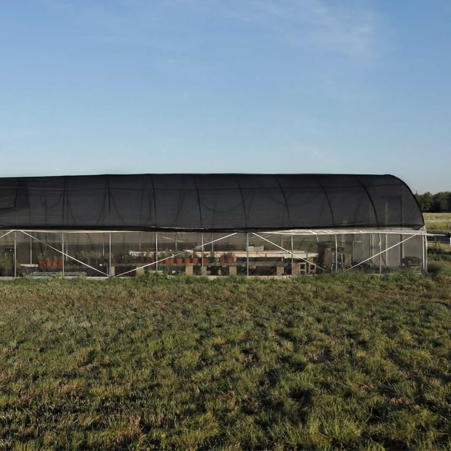
Shade House
A Shade House is a specialized protected cultivation structure designed to provide controlled shading and a favorable microclimate for the cultivation of delicate crops, nurseries, flowers, vegetables, medicinal plants, and horticultural crops. The structure is covered with high-quality shade nets that reduce excessive sunlight intensity, lower temperatures, protect crops from harsh weather conditions, and create an ideal environment for healthy plant growth. Shade houses are widely used in modern agriculture to improve plant quality, increase survival rates, and enhance overall productivity while maintaining cost-effective operations.
The structure is typically constructed using durable hot-dip galvanized steel pipes that offer excellent strength, stability, and long service life. Depending on the crop requirements and local climatic conditions, different shade net percentages such as 35%, 50%, 75%, or 90% can be installed to regulate light penetration and temperature. The shade nets are UV-stabilized and designed to withstand prolonged exposure to sunlight while maintaining their effectiveness over many years.
One of the primary functions of a shade house is to protect crops from excessive solar radiation, high temperatures, strong winds, heavy rainfall, and hailstorms. By reducing heat stress and maintaining a cooler environment, the structure promotes vigorous plant growth, improved root development, and higher-quality produce. The controlled environment also minimizes moisture loss through evaporation, helping to conserve water and improve irrigation efficiency.
Shade houses are particularly beneficial for nursery production, where young seedlings require protection from extreme weather conditions during their critical growth stages. The structure provides ideal conditions for seed germination, plant propagation, hardening of seedlings, and production of healthy planting materials. Many commercial nurseries use shade houses to produce vegetable seedlings, fruit saplings, ornamental plants, forestry plants, and tissue culture plants with higher survival rates and better growth performance.
In addition to nursery production, shade houses are extensively used for cultivating flowers, medicinal plants, leafy vegetables, orchids, exotic plants, and other crops that require partial shading. The controlled environment helps reduce pest and disease incidence, improve crop uniformity, and increase marketable yield. By protecting crops from environmental stress, growers can achieve superior quality produce that commands premium prices in the market.
Shade houses are also an economical solution for farmers seeking to adopt protected cultivation technologies with relatively low investment and maintenance costs. They require minimal energy consumption and can be integrated with drip irrigation, misting systems, fertigation units, and automation technologies to further improve production efficiency. The flexibility of design and scalability make shade houses suitable for small farms, commercial nurseries, research institutions, government projects, and large-scale horticultural enterprises.
Key Benefits
- Protection from Excessive Sunlight and Heat
- Improved Seed Germination and Plant Growth
- Reduced Water Evaporation and Better Water Efficiency
- Protection from Wind, Rain, and Hail
- Enhanced Nursery Production
- Better Crop Quality and Uniformity
- Lower Pest and Disease Pressure
- Cost-Effective Protected Cultivation Solution
- Suitable for Various Crops and Climatic Conditions
- Increased Productivity and Profitability
Suitable Applications
- Vegetable Nurseries
- Fruit Plant Nurseries
- Flower Cultivation
- Medicinal and Aromatic Plants
- Tissue Culture Hardening Units
- Forestry and Plantation Nurseries
- Ornamental Plants and Landscaping
- Exotic Plant Production

Have questions?
Get in Touch with HABPL!
Have questions about our agricultural solutions? Our team is ready to assist you.

HABPL specializes in designing, manufacturing, & installing complete turnkey agri projects.

HABPL innovates advanced ECRC-type ripening chambers for agricultural applications.

HABPL provides continuous guidance ensuring proper operation of agricultural projects.

HABPL builds trust through comprehensive maintenance contracts.

Structured farming partnerships ensuring consistent agricultural supply chains.

HABPL provides guidance for efficient and sustainable agricultural operations.
